Spaghetti Cacio e Pepe (Pecorino and black pepper spaghetti)
Spaghetti cacio e pepe (pecorino and black pepper spaghetti) is one of the cornerstones of traditional Roman cuisine: this recipe only…
- Easy
- 20 min
- Kcal 375
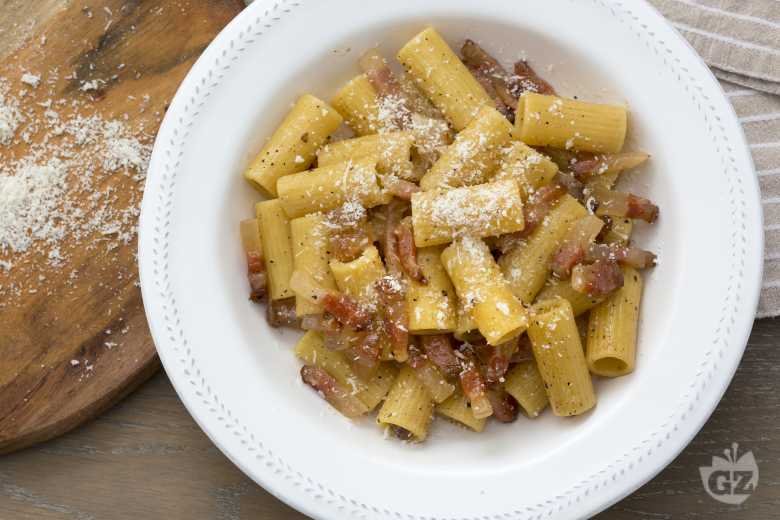
Pasta alla gricia is the oldest of Rome's four canonical pasta dishes — and the best introduction to guanciale pasta there is. Older than carbonara, older than amatriciana — and the one that explains all the others. It predates the tomato's arrival in Italian cooking and the egg yolk technique of carbonara: just guanciale, Pecorino Romano, black pepper, and pasta water, combined into a sauce that is creamy without cream and rich without heaviness. Carbonara adds egg yolk to this base. Amatriciana adds tomato. Gricia is what was there before either of them.
The technique is the same logic that runs through all four dishes: the starchy pasta cooking water emulsifies the fat from the guanciale and the protein from the cheese into something that coats each piece of rigatoni rather than pooling at the bottom of the bowl. The guanciale goes in first, rendered over medium heat until the fat is translucent and the meat has colored without turning crisp — overcooked guanciale turns bitter, which is the one mistake worth avoiding. Black pepper goes in with the fat, where it blooms rather than sitting raw on top at the end.
It's a four-ingredient gricia sauce that rewards attention to each one. Rigatoni alla gricia is the classic format — the ridges hold the sauce — though bucatini and tonnarelli work equally well.
You might also like:
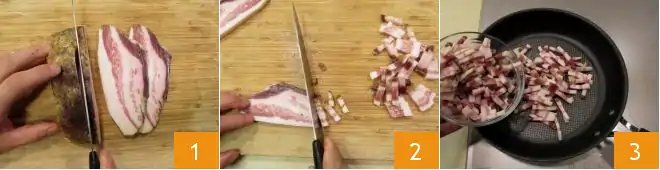
To prepare pasta alla gricia, first place a pot full of water on the burner that will be used to cook the pasta. At this point take the guanciale and cut slices 1/2" (1 cm) 1 thick. Then separate any rind that may be present (you can keep it in the fridge and use it in other recipes, such as soups) and from the slices you get strips about 1/8" (half a cm) 2 thick. Pour the guanciale into a pan already hot, without adding more fat 3;
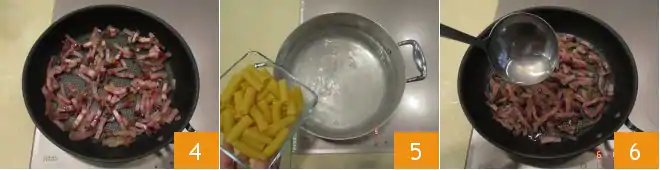
Let it sizzle on medium heat for about ten minutes until it is golden and crisp 4, taking care not to burn it. In the meantime the water will have come to a boil, salt and cook the pasta 5; while the pasta cooks, finely grate Pecorino cheese. When 2 minutes are left before the pasta is done, slow down the cooking of the guanciale by adding a ladle of cooking water. The cooking of the guanciale will stop and the starch released from the pasta will create a pleasant cream 6. Jiggle the pan a little bit to move the pieces of guanciale.
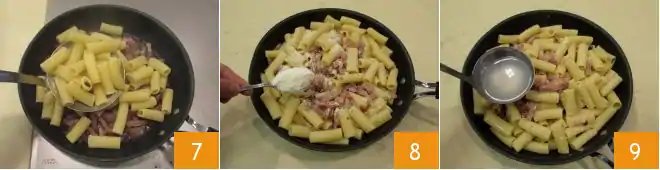
At this point your pasta is done, add it directly to the sauce 7, preserving the cooking water. Stir for about 1 minute, shake the pan and stir. Then remove the pan from the heat, sprinkle with a third of grated Pecorino cheese 8 and add a little more cooking water if necessary 9.
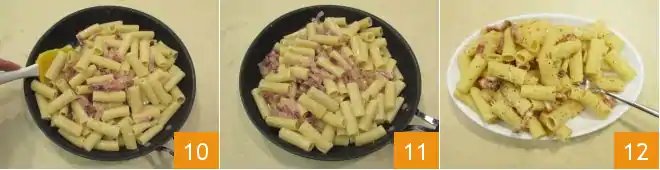
Stir and toss the pasta again; you will notice that a tasty cream will have been created 11. You can then serve pasta alla gricia and garnish each plate with the remaining Pecorino cheese 12.