Spaghetti all'Amatriciana

/5

Listen to the recipe

PRESENTATION

Spaghetti all'Amatriciana

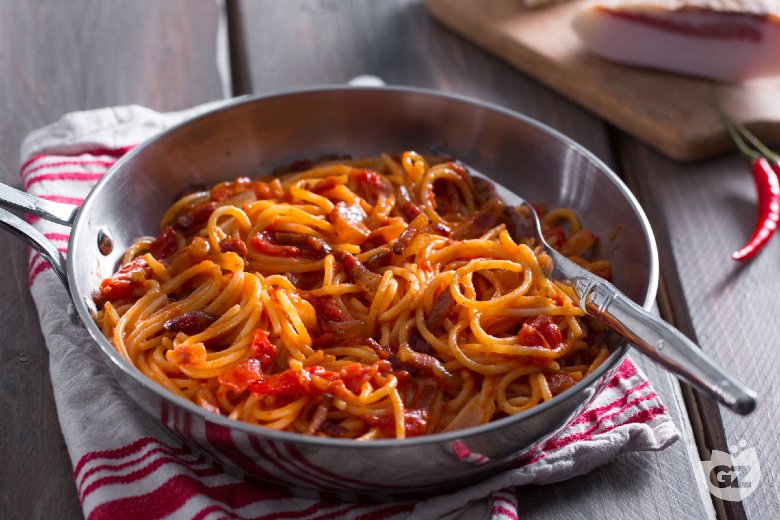
Amatriciana is four ingredients: guanciale, tomatoes, Pecorino Romano, and pasta. The dish comes from Amatrice, a small town in the Apennine mountains between Lazio and Abruzzo, and predates Rome's claim to it by centuries — the original version, called gricia, had no tomato at all. The tomato arrived later, the recipe traveled to Rome, and somewhere along the way Amatriciana became one of the four canonical pasta dishes of Roman cuisine, alongside carbonara, cacio e pepe, and gricia.

The spaghetti amatriciana you get from this recipe follows the four-ingredient rule strictly. What makes it work is the guanciale. Cured pork cheek has a different fat profile than pancetta or bacon — it renders more completely, stays tender rather than crisp, and leaves behind a cooking fat that carries the flavor of the cured meat into the tomato sauce. The Pecorino Romano goes on at the end, sharp and salty, cutting through the richness of the pork. Spaghetti is the traditional choice; bucatini, with its hollow center, holds the sauce differently — both are correct depending on who you ask and where they're from.

Once you've made this version, try the variations: with garlic, with onion, with water instead of white wine to deglaze. Each one is a small argument about what Amatriciana really is, and the argument is worth having.

You might also like:

INGREDIENTS
Spaghetti 0.7 lb (320 g)
Peeled tomatoes 0.9 lb (400 g)
Guanciale 5 oz (150 g)
Pecorino Romano PDO cheese ¾ cup (75 g) - for grating
Fine salt to taste
Extra virgin olive oil to taste
Fresh chili pepper 1
White wine ¼ cup (50 g)
Preparation

How to prepare Spaghetti all'Amatriciana

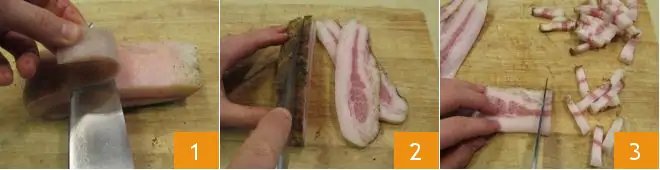
To prepare spaghetti Amatriciana (spaghetti with tomato and bacon), first boil the water to cook the pasta in, then add salt. Prepare the sauce: take the guanciale, remove the pork rind 1 and cut it into slices about 1/4-inch (1 cm) thick 2 then into strips about 1/8-inch (1/2 cm) wide 3.
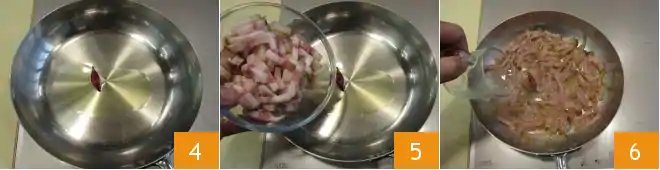
Heat a drizzle of oil in a pan, preferably a stainless steel skillet, add the whole chili pepper 4 and the guanciale cut into strips 5; brown over low heat for 7-8 minutes until the fat has melted and the meat is crunchy; stir often to prevent it from burning. Once the fat has melted, pour in the white wine 6, turn up the heat and let it evaporate.
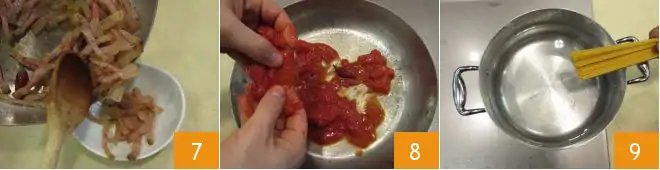
Transfer the guanciale to a plate 7 and set aside, pour the peeled tomatoes into the same pan, breaking them up with your hands directly into the cooking liquid 8, continue cooking the sauce for about 10 minutes. As soon as the water boils, pour in the spaghetti 9 and cook them al dente.
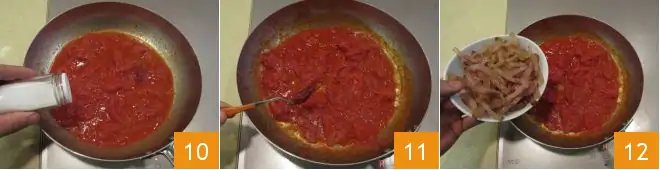
Add salt to taste, remove the chili pepper from the sauce 11, add the guanciale strips to the pan 12  and stir to mix.
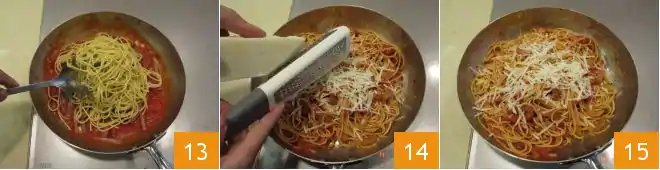
Once the spaghetti are cooked, drain them and add them directly to the sauce in the pan 13. Sauté the pasta very quickly to mix it well with the sauce. If you like the pasta al dente you can turn off the heat otherwise pour a little of the pasta cooking water to continue cooking. To finish, sprinkle with grated pecorino cheese 14: your spaghetti all'Amatriciana is ready to be served 15!

Storage

Amatriciana keeps in an airtight container in the refrigerator for up to one day. Freezing is not recommended — the sauce holds, but the pasta doesn't.

Tips

The guanciale is not optional and not interchangeable — pancetta and bacon are different products with different fat content and curing profiles, and they produce a different result. For the pasta, this recipe uses spaghetti no. 3; spaghetti no. 5 or spaghettoni work equally well. Bucatini, if you prefer it, changes the texture of each bite but not the logic of the dish. Deglaze with white wine for a cleaner finish, or with a splash of water if you want to keep the focus entirely on the pork and tomato.

Interesting fact

In August 2016, a magnitude 6.2 earthquake destroyed much of Amatrice and the surrounding villages, killing nearly 300 people. In the weeks that followed, restaurants across Italy and around the world put Amatriciana on their menus and donated a portion of the proceeds to the reconstruction effort. The dish had always carried the name of the town — after the earthquake, it carried its story too. Amatrice has been slowly rebuilding since, and the recipe remains one of the more direct ways the rest of the world has stayed connected to what happened there.

For the translation of some texts, artificial intelligence tools may have been used.