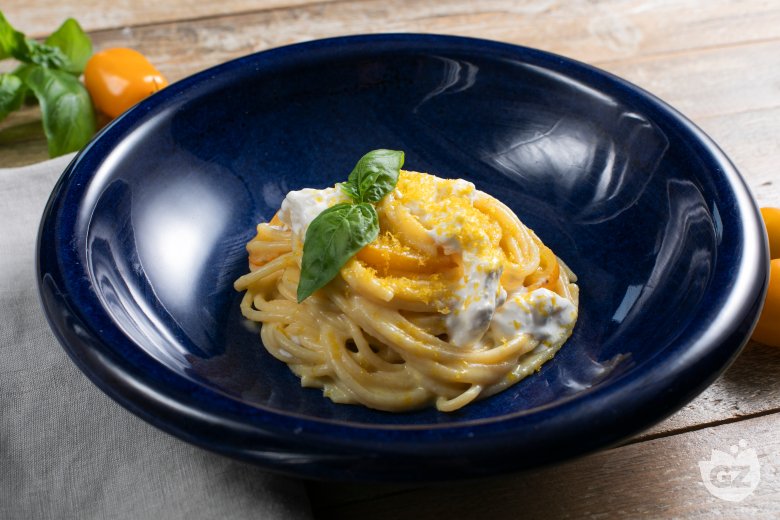
Pasta with yellow cherry tomatoes, stracciatella and bottarga

- Difficulty: Easy
- Prep time: 30 min
- Cook time: 15 min
- Serving: 4
Listen to the recipe
PRESENTATION
Pasta with yellow cherry tomatoes, stracciatella, and bottarga—it’s like having a bite of Southern Italy right at your table. Seriously good. Along the stunning Mediterranean coast, folks are all about mixing bright seafood vibes with creamy cheeses and sweet local tomatoes. This dish? It’s got a bit of flair. Roasted and sautéed golden cherry tomatoes make this velvety sauce. Fresh and rich taste, all in one bite. The stracciatella pasta recipe isn’t your typical creamy pasta—it's subtler, with moist ribbons of stracciatella cheese blending right in. That creamy texture, man, it really works with the salty, tangy touch of grated bottarga—a classic cured fish roe from the coast.
Thing is, people like to keep things light but full of flavor, especially in the summer, and this dish just nails it. I mean, tender pasta with zippy seafood, it’s a win.
Fresh basil on top? And the aroma? It's something else. Makes this bottarga pasta dish different from the rest. Pretty much. You get a bit of everything—golden tomatoes for that gentle sweetness, creamy, mild cheese, and a surprising salty kick from the bottarga. It’s like what you’d find at a seaside trattoria, you know? Local seafood, big on cheese, and all about simple ingredients coming together.
Some regional versions might swap in other cherry tomatoes or a different basil, but to be honest, pasta with yellow cherry tomatoes and creamy stracciatella hits differently on a hot day. For sure. Every forkful has that crispy edge from the bottarga, balanced by those moist, sauce-coated noodles. It’s a solid reminder of how Mediterranean pasta dishes can be both elegant and down-to-earth—way, way better with local flavors and thoughtful prep. If you’re into traditional Italian ingredients and a little surprise at the table, this seafood pasta with bottarga checks all the boxes effortlessly.
You might also like:
- INGREDIENTS
- Gluten-free Spaghetti pasta 11.3 oz (320 g)
- Yellow cherry tomatoes 2 cups (300 g) - datterini (small plum/cherry variety)
- Garlic 1 clove
- Extra virgin olive oil to taste
- Basil to taste
- Black pepper to taste
- Stracciatella cheese 3.5 oz (100 g)
- Bottarga 0.7 oz (20 g)
How to prepare Pasta with yellow cherry tomatoes, stracciatella and bottarga
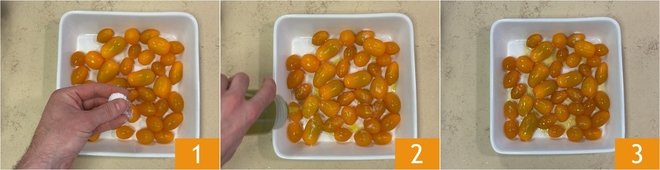
To prepare the spaghetti with yellow cherry tomatoes, stracciatella and bottarga, start with the cherry tomatoes. Wash the yellow datterini, then transfer about 7 oz (about 1 1/3 cups) of them to a baking dish and season with salt 1 and extra virgin olive oil 2. Mix well 3 and bake them in a preheated fan oven at 446°F for 15 minutes.
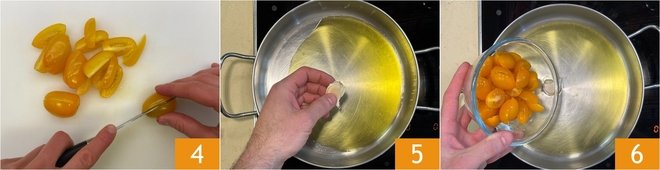
Meanwhile, halve the remaining cherry tomatoes 4. Pour a drizzle of oil into a skillet, add the garlic 5 and let it infuse, then add the halved cherry tomatoes 6.
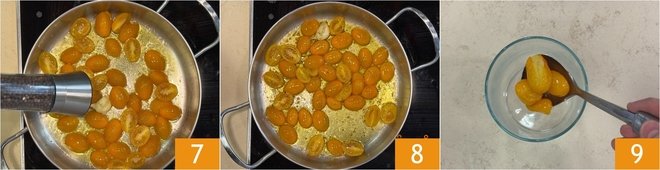
Season with salt and pepper 7, then sauté over medium heat for about 4 minutes 8. At the same time, put a pot of water on the heat, salted to taste, which will be used to cook the pasta. When the roasted cherry tomatoes are ready, transfer them to a tall, narrow container 9.
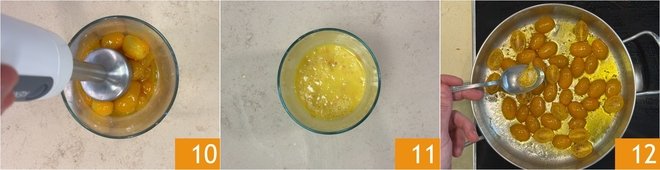
Blend them with an immersion blender 10 until you obtain a creamy purée 11. Remove the garlic from the sautéed tomatoes 12.
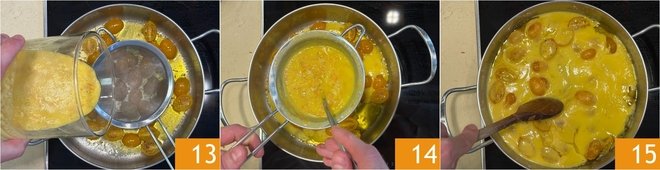
Pass the roasted cherry tomato purée through a fine sieve directly into the pan with the sautéed tomatoes 13 14, then stir and let the sauce develop its flavor 15.
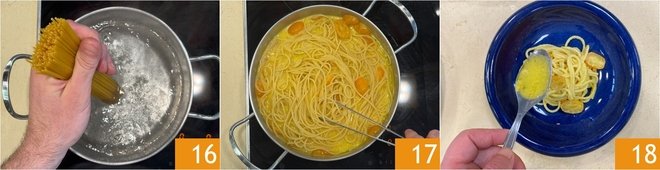
When the water comes to a boil, cook the spaghetti 16. Drain them al dente directly into the pan with the sauce and toss to coat them well with the dressing 17. Plate the spaghetti with their sauce 18.
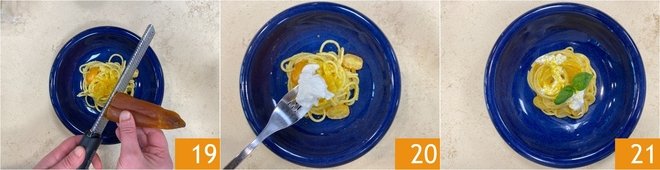
Add a generous grating of bottarga 19, a dollop of stracciatella 20 and finish with fresh basil 21. Serve immediately.