Pasta with pesto, green beans and tuna
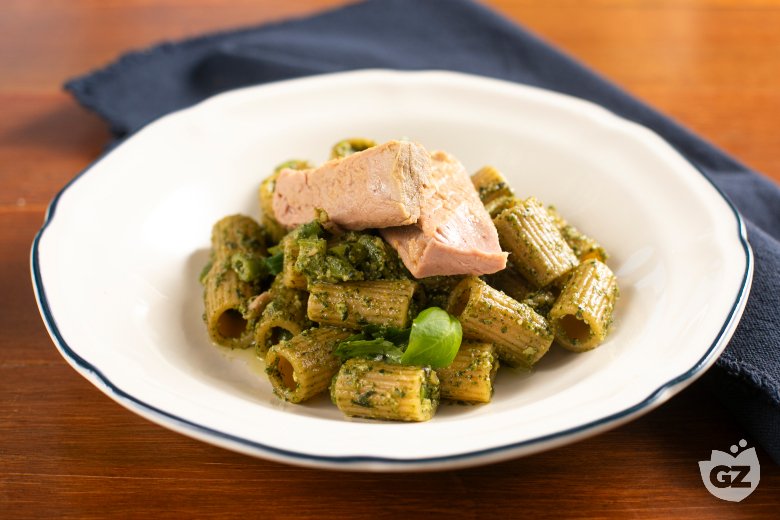

- Difficulty: Easy
- Prep time: 15 min
- Cook time: 15 min
- Serving: 4
PRESENTATION

Pasta with pesto, green beans, and tuna is a classic from Liguria that makes summertime meals super easy and exciting. Honestly, folks in this part of Italy really love using super fresh ingredients, and this dish totally shows that off. The tender green beans just mix right in with the pasta. Plus, you get that big hit of flavor from real pesto alla genovese—basil, pine nuts, Parmigiano, and good olive oil all smashed together into something bright and herby. And look, filets of tuna packed in olive oil add real protein—making this way more than just another pasta with pesto.
A bit of lemon zest tossed on at the end gives the whole thing a zesty kick that wakes up all the flavors. Around Liguria, folks keep it light and balanced, so you get a Mediterranean pasta dish that feels satisfying but never heavy. And here's the deal: this combo is full of those "good fats" everyone talks about, thanks to the olive oil and tuna.
Regional twists pop up all over Italy, and you might find people swapping in different shapes of green bean pasta or using a homemade jar of preserved tuna if they’ve got it. Sometimes, a handful of small tomatoes go in for a sweet surprise—really nice—but the main idea sticks to healthy tuna pasta that comes together super quick—like, thirty minutes or so, even if you’re moving slow. This is the kind of Italian pasta recipe you pull out when you want something fresh and filling but don’t want to fuss.
Everything goes together so well: the pasta soaks up all that basil flavor, the green beans stay crisp, and the tuna gives the right amount of bite. Eating this is all about kicking back with food that’s simple, moist, and full of good stuff, whether you’re right on the Ligurian coast—or just wishing you were there. People love how a tuna pasta recipe like this one tastes like sunshine and a quick escape, with just enough real flavor to keep things interesting. Perfect for those evenings when you want something tasty without spending too much time in the kitchen. For sure.
You might also like:
INGREDIENTS
- Whole wheat Tortiglioni pasta 3 ¼ cups (320 g)
- Tuna filet 7 oz (200 g) - in olive oil (drained weight)
- Green beans 1.8 cups (220 g)
- Lemon peel to taste
- Basil to taste
- For the pesto
- Basil 1.6 cups (40 g)
- Extra virgin olive oil 4 ½ tbsp (60 g) - for preserving the tuna
- Parmigiano Reggiano PDO cheese 1.8 oz (50 g)
- Pine nuts 1.1 oz (30 g)
- Garlic ½ clove
How to prepare Pasta with pesto, green beans and tuna
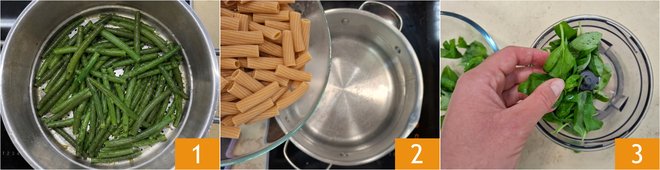
To prepare pasta with pesto, green beans and tuna, first trim the green beans and steam them for about 5–10 minutes; they should not become too soft 1. Meanwhile, bring a pot of salted water to a boil and cook the whole-wheat pasta al dente 2. While the pasta cooks, make the pesto: place the basil leaves, previously washed and dried, into a food processor 3.
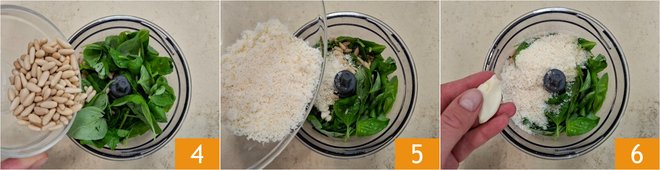
Add the pine nuts 4, grated Parmigiano Reggiano 5 and half a clove of garlic, with the inner sprout removed 6.
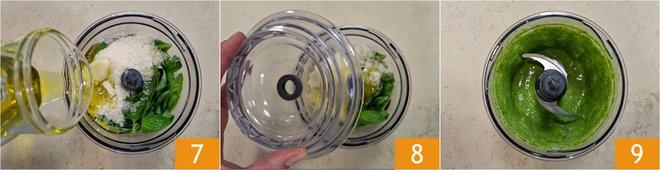
Add the oil from the tuna jar 7, close 8 and blend until you obtain a creamy consistency 9, taking care to pulse the processor intermittently to avoid overheating the basil.
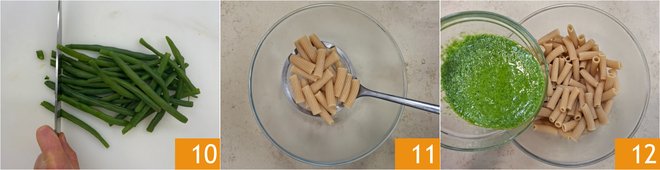
Once cooked, drain the green beans and cut them into small pieces 10. Drain the pasta as well and transfer it to a bowl 11, then add the pesto 12.
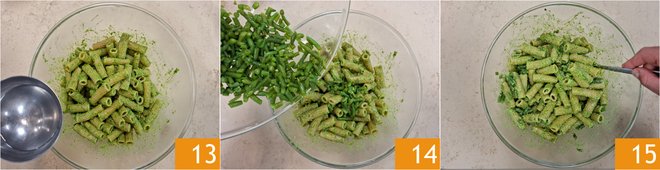
Mix using a little of the cooking water to properly coat the pasta 13, then add the green beans 14. Combine everything again 15.
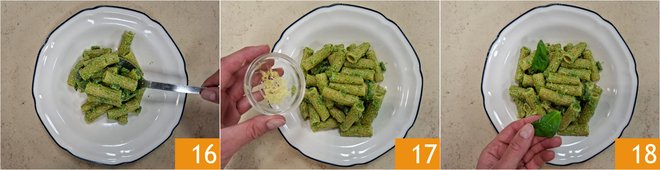
Plate 16 and perfume with grated lemon zest 17 and a few basil leaves 18.
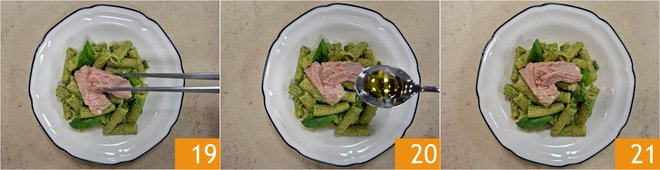
Finally, top with the whole tuna fillets 19 and a drizzle of their oil 20. The pasta with pesto, green beans and tuna is ready to be served 21!