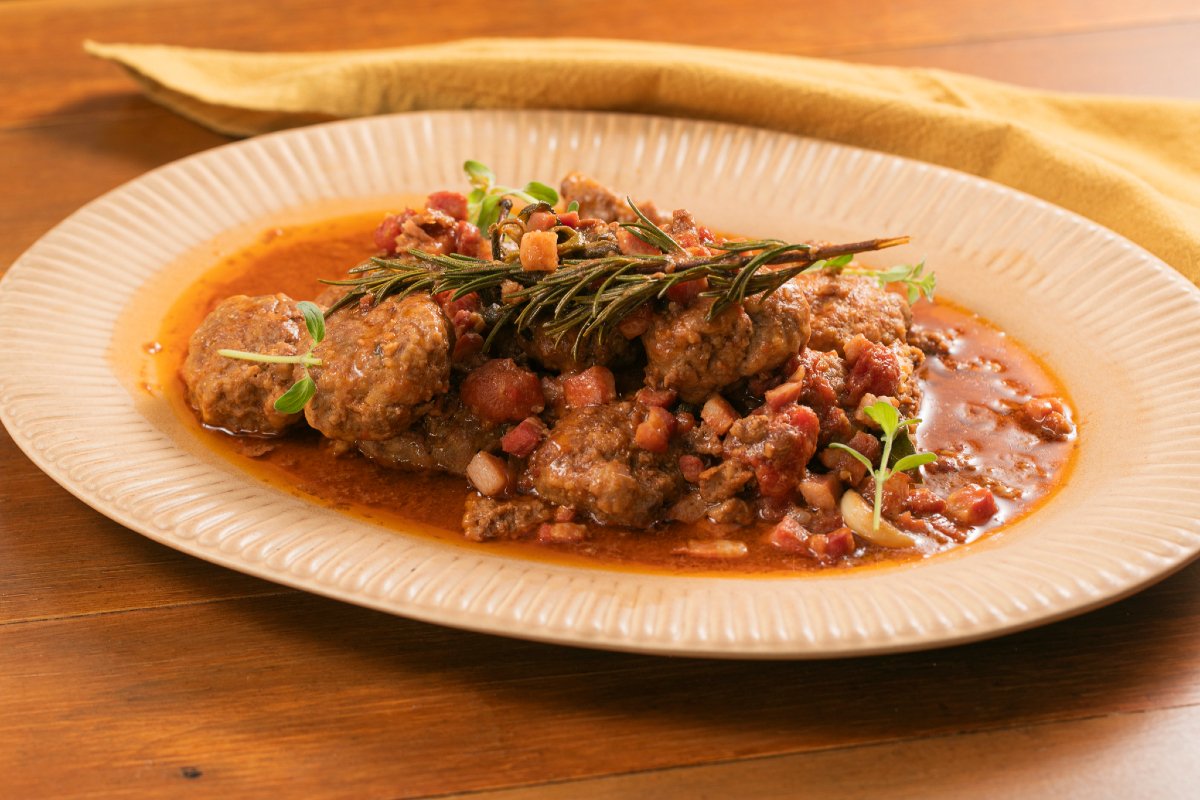


Meatballs with tomato sauce
Ground beef, Italian sausage, and a slow tomato sauce: the Southern Italian meatball recipe that earns the scarpetta every time. Ready in…
- Very easy
- 55 min
Meatballs in tomato sauce really capture the warmth and coziness of central Italy, especially around Rome. And look, every family has their own twist, but the basics? Pretty much the same: ground meat mix, bread soaked in milk (keeps it moist), a sprinkle of Parmesan, and a hint of thyme. Really, it ends up tender and so full of flavor. When those meatballs hit the pan, the aroma? Seriously good. Makes you wanna hang out in the kitchen, just waiting for dinner. Typically, you brown the meatballs to get that golden color, but the real magic? It happens when you let them simmer in a rich tomato sauce with pancetta and a bunch of herbs. It’s a homemade meatballs recipe that’s all about the simple stuff coming together to make something really, really special.
Soaked bread? It makes a big difference, keeping every bite of these stewed meatballs soft inside while they hold together in that thick, tasty sauce. In Rome and pretty much all over Central Italy, these meatballs in tomato sauce are Sunday table regulars. Everyone grabs a piece of crusty bread to scoop up all that extra sauce—locals call this scarpetta—and it’s basically a must-do. The sauce? Ends up rich, a bit sweet, super dense from simmering nice and slow with pancetta bits and herbs. And you know what? Some families like extra garlic or swap thyme for parsley, but everyone agrees the best part is dunking bread right into the pot. Compared to other easy meatball recipes or even classic Italian ones from different regions, the Roman way? Way, way better. It gives you this deep, homey flavor that really sticks with you. It’s the kind of dish that makes you want to stay at the table, telling stories and, you know, passing the bread basket just one more time. The tradition and love poured into these Italian meatballs make them a comforting favorite, offering a true taste of Italy with every bite.
You might also like:
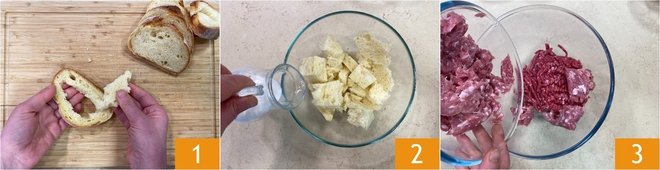
To prepare the meatballs stewed in tomato sauce, remove the bread crumb 1, place it in a bowl and cover it with milk 2. Let it soak while you continue with the recipe. In another bowl put the ground meat and the sausage 3.
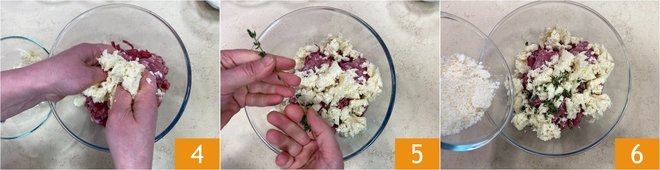
Squeeze the bread well and add it to the bowl with the meat 4, then flavor with the thyme leaves 5 and season with grated Parmigiano Reggiano (Parmesan) 6.

Add the eggs 7 and season with salt, pepper 8 and nutmeg. Mix well with your hands 9.
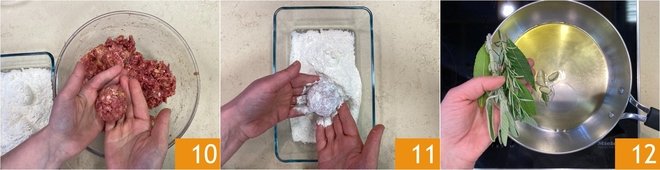
Once the mixture is homogeneous and comes away easily from your fingers, begin shaping the meatballs. Take a portion of about 2 oz (50 g) and flatten it slightly between your hands 10: this way they will be easier to turn and will brown perfectly. As you form them, lightly flour them on all sides 11. Move on to cooking: in a large pan heat a drizzle of olive oil with the garlic, bay leaf and rosemary 12.
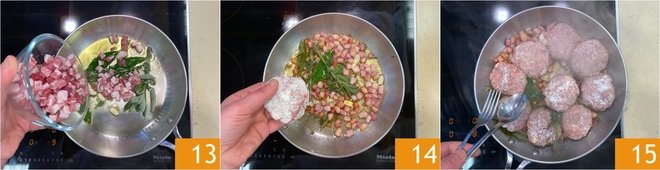
Add the pancetta 13 and let it brown until slightly golden, then place the meatballs 14 and seal them on both sides for about ten minutes 15.
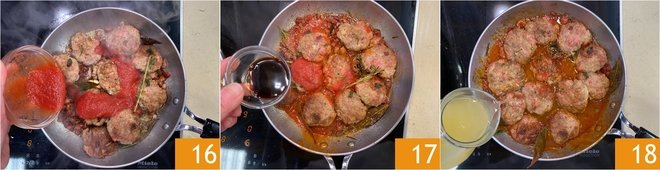
Pour in the tomato purée/passed tomatoes (passata) 16 and the balsamic vinegar 17. As soon as the vinegar has evaporated, add the beef broth 18.
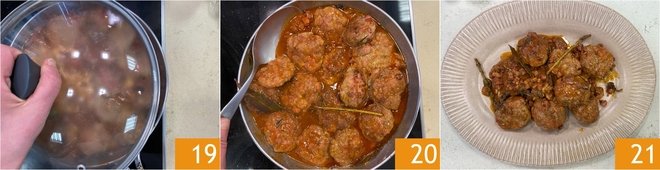
Cover with a lid 19 and simmer gently for about half an hour (about 30 minutes) 20. Serve your meatballs stewed in tomato sauce hot 21.