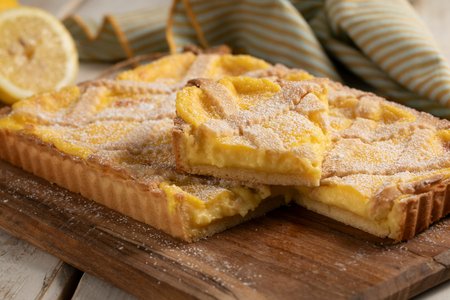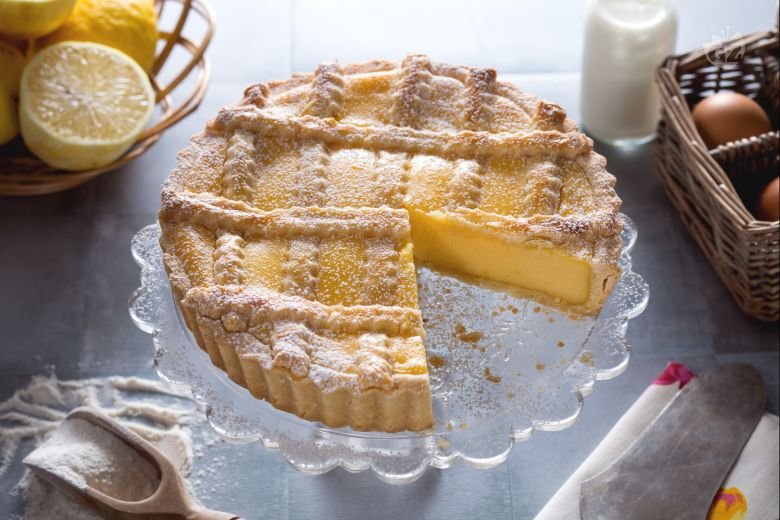


Rhubarb Tart with Lemon Custard
The rhubarb tart with lemon custard is a dessert with a unique flavor given by the syrupy rhubarb stalk and a fragrant custard.
- Easy
- 1 h 30 min
- Kcal 486
Lemon cream crostata—it's like a warm hug from Nonna. Really. Especially on a chill Sunday afternoon. What makes it really, really special? It’s that crispy pasta frolla crust mixed with a tangy yet sweet lemon filling. Super tasty. And the crust? It has this light golden look. Why? Because, you know, Italians sometimes swap out butter for oil—depending on what's handy or who’s baking.
In places like Campania or Sicily, locals use their famous lemons with that aromatic kick. Seriously good. It’s a simple, down-to-earth dessert—perfect for family hangouts. Picture it: passed around after a big lunch, everyone grabbing a slice, chatting away. That homey vibe is why the lemon cream crostata is such a hit—whether you grew up with it or you’re just finding it.
On the dessert table, the Italian lemon tart really stands out. It’s bright in flavor and has that tender texture when everything's just right. Unlike heavy desserts, this one's light enough after a big meal but still full of that Southern Italian sweetness—makes you crave another bite. And look, you might see different takes on the lemon tart in Calabria or the Amalfi Coast. Folks add their own twists—more zest maybe, or a different pastry base.
The filling is smooth, creamy lemon. And kind of like homemade lemon curd, but softer and more moist. When you cut a slice, the citrus scent—it's almost as good as the taste. With its mix of crispy crust and creamy middle, it’s easy to see why so many love Italian dessert recipes like this. It feels special and familiar. Every bite of this lemon crostata recipe brings a little Southern Italy to your table, which is pretty awesome. And listen, next time you want a dessert with nostalgia and flavor, this crostata might just be the one. Honestly, you can't go wrong.
You might also like:
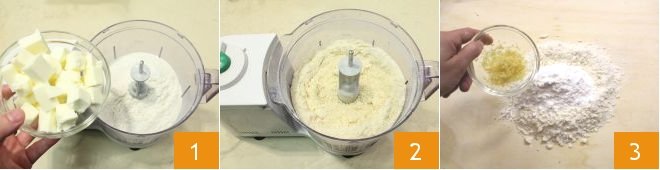
To prepare the lemon cream tart, start with the Shortcrust pastry. In a food processor, combine the flour, a pinch of salt, and the ice-cold butter cut into pieces 1, and briefly pulse until you get a sandy-looking mixture 2. Place it on a work surface along with the powdered sugar. Make a well in the center and add the grated lemon zest 3
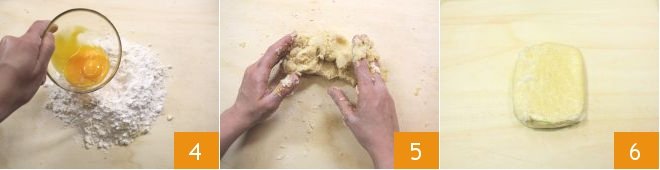
and the egg yolks 4. Knead briefly with your hands 5 until the ingredients are well combined and form a homogeneous dough. Wrap it with plastic wrap 6 and let it rest in the refrigerator for at least half an hour.
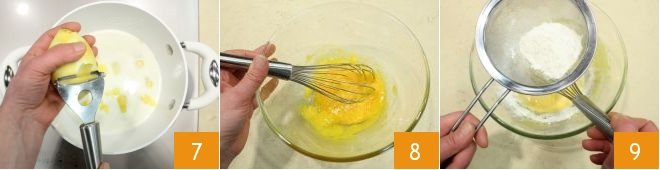
In the meantime, prepare the Pastry cream. In a saucepan, combine the milk with the lemon zest, which you can peel using a potato peeler to avoid the bitter white part 7. Heat over low heat without bringing it to a boil. In a separate bowl, vigorously whisk the egg yolks and sugar 8, then sift in and add the flour and cornstarch (or cornstarch) 9, continuing to mix carefully to prevent lumps.

Gradually pour the milk into the bowl, stirring well with a whisk 10. Then return the mixture to the saucepan, filtering it with a sieve to avoid lumps and remove the lemon zest 11. Continue stirring the cream while cooking over low heat for about 15 minutes until it thickens 12.
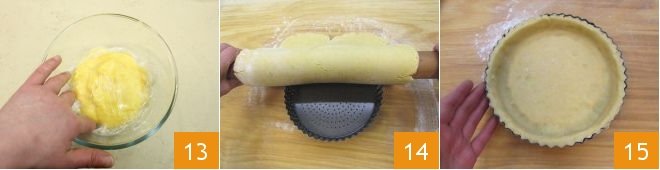
Place the cream in a bowl and cover it with plastic wrap, allowing direct contact with the surface (using wraps suitable for this purpose) to prevent a skin from forming 13. Refrigerate it. Retrieve the shortcrust dough and roll it out with a rolling pin on a slightly floured work surface to a thickness of about 1/4 inch. Place the rolled dough into an 8-inch diameter, 1.5-inch high tart pan 14 (we used a perforated pan; if you have a classic unperforated one, you should butter and flour it first to prevent sticking). Roll the rolling pin over the pan's surface to remove excess dough 15, which you can knead and roll out again,

to form decorative strips. Use a fluted pastry cutter or a knife to make them 16. Prick the tart's base with a fork 17 to prevent the dough from puffing up too much during baking, then pour in the lemon pastry cream, leveling it with the back of a slightly moistened spoon 18.

Arrange the dough strips, laying them gently first in one direction 19 and then the other 20 to create a lattice pattern, ensuring they are spaced apart. Use a knife to trim any excess dough 21
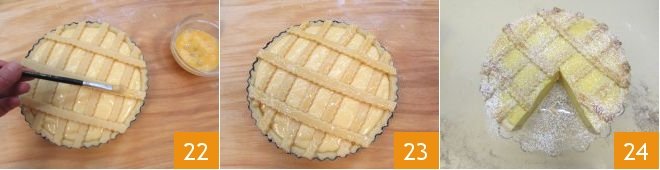
and brush the strips with lightly beaten egg, using a pastry brush 22. Bake the tart in a preheated static oven at 340°F for 60 minutes (or in a fan oven at 300°F for about 50 minutes), covering with aluminum foil after 45 minutes (35 minutes for fan), to prevent the surface from burning 23. Your lemon cream tart is ready; remove it from the oven and let it cool for at least a couple of hours for the cream to set properly. Finally, dust the surface with a bit of powdered sugar and enjoy it 24.