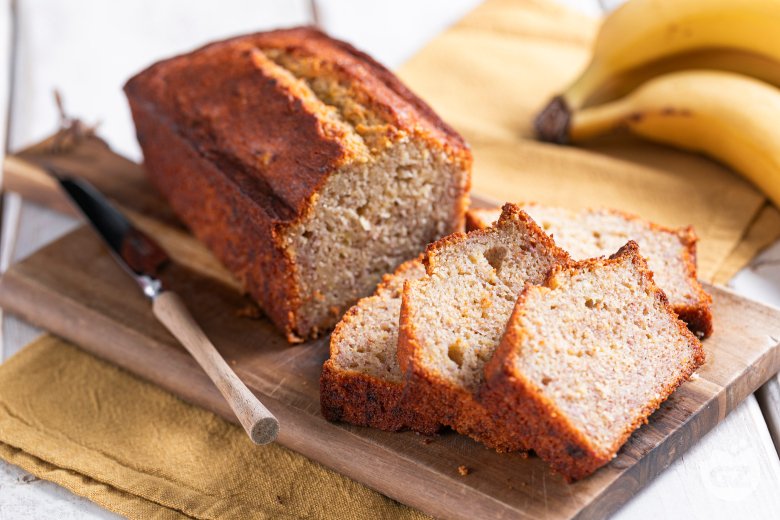

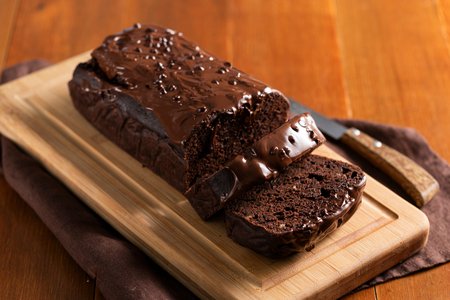
Chocolate Banana Bread
The dark chocolate banana bread is a soft and delicious treat for breakfast, enriched with chocolate chips. Discover this easy recipe!
- Average
- 50 min
Banana bread exists because of overripe bananas — the blacker the peel, the better the loaf. At that stage the starch has converted almost entirely to sugar, which is what gives the crumb its moisture and depth without loading the batter with extra sweetener. This recipe uses the standard American method: one bowl, no mixer, roughly an hour in the oven. The result is a dense, tender loaf with a crust that cracks along the top where the batter rises — the reliable sign it's done right.
This banana bread recipe keeps the base deliberately unfussy. The base is easy to adapt. Fold in chopped walnuts or pecans for texture, or dark chocolate chips if you want something closer to dessert. A teaspoon of cinnamon or nutmeg shifts it toward the warmer end without changing the structure. For a dairy-free version, a neutral oil replaces butter cleanly; for gluten-free, a 1:1 almond flour substitution works better here than in most baked goods because the banana already provides enough moisture to compensate. Banana bread improves on day two once the flavors settle — slice it cold, or warm a piece briefly in the oven if you prefer. Either way, it's one of the more forgiving things you can bake.
You might also like:
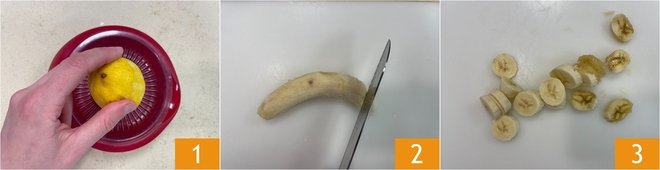
To prepare the banana bread, first squeeze the lemon juice 1, then move on to the bananas (we recommend using very ripe ones): peel them and cut them into slices 2 3.
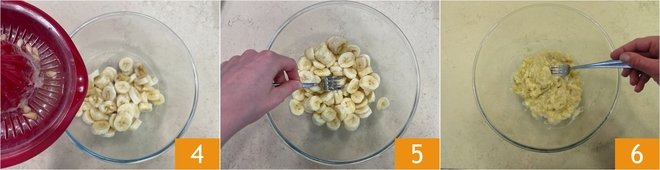
Transfer them to a bowl and add the lemon juice to prevent them from darkening 4, then mash with a fork 5 until you get a puree 6.
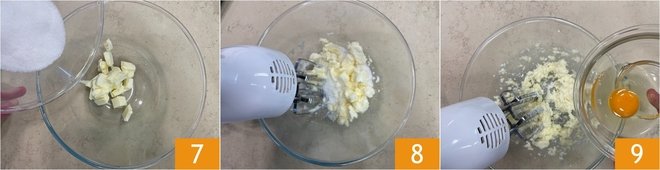
In another bowl, place the soft but still pliable butter in pieces, along with the sugar 7. Work with electric mixers at medium speed 8 until you get a uniform mixture. When you have obtained a cream, add one egg at a time to facilitate absorption 9.
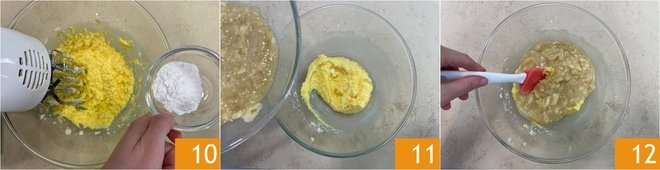
Still with the mixers running, add the baking powder 10 and a pinch of salt. Beat again to fully absorb everything. At this point, incorporate the banana puree 11 and mix with a spatula 12.
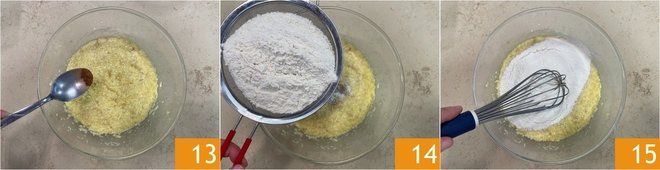
Add the cinnamon 13 and sift the flour directly into the bowl 14. Stir again, using a hand whisk 15.
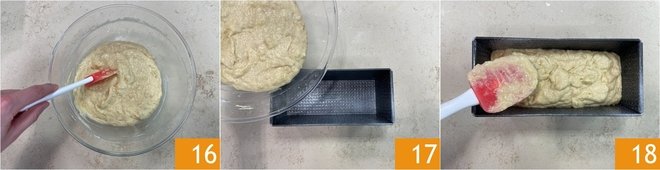
Do not overmix the batter, but make sure it is well combined and free of lumps 16. Pour the batter into a 9x3-inch loaf pan, already greased and floured 17. Level the surface with the spatula 18.
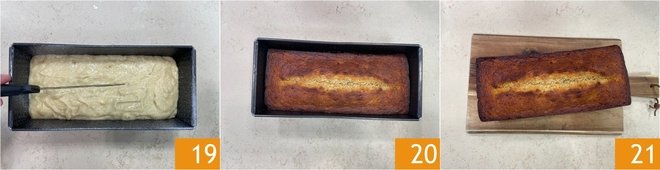
Make a lengthwise incision with a knife blade dipped in melted butter 19, this will help achieve a precise split in the center of the pound cake. Bake in a preheated static oven at 350°F for about 60 minutes. After this time, check the cooking with a toothpick, then remove from the oven and let the banana bread cool in the pan 20 before removing it 21 and slicing.


