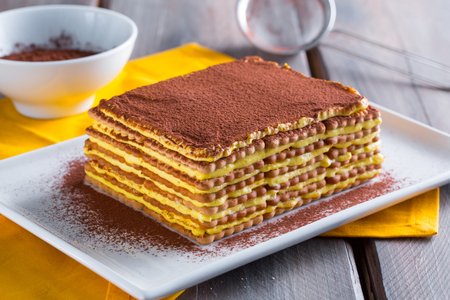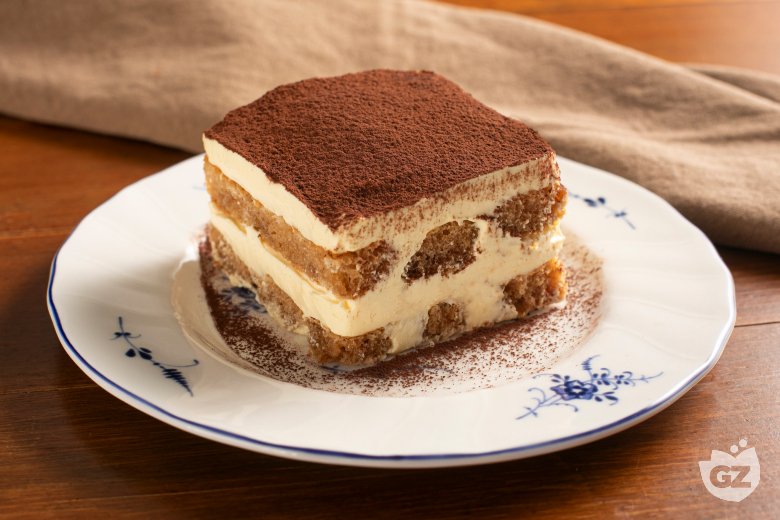


Nutella tiramisu
Nutella tiramisu is a super delicious dessert, perfect to end a dinner with .... no one will be able to resist!
- Easy
- 35 min
The name means "pick me up" — and the espresso is only part of the reason. What actually lifts a tiramisù is the cream: mascarpone whipped with egg yolks and sugar until it's thick enough to pipe, light enough to melt. No dessert has traveled further from a single Italian kitchen to the rest of the world with so little lost in translation. The origins are disputed — Veneto, Friuli, and Tuscany have all claimed the recipe for decades — but the method is non-negotiable: ladyfingers dipped briefly in strong coffee, layered with cream, chilled until the whole thing sets into something greater than its parts.
This classic tiramisu recipe keeps it to six ingredients — the same ones that made the dessert famous. The dip is the step most home cooks get wrong. Too long and the savoiardi turn to mush; too short and they stay dry at the center. This version keeps it to six ingredients — no cream cheese shortcuts, no whipped cream padding — and it's best assembled the night before: the layers settle, the mascarpone firms, and the coffee soaks through evenly. A dusting of unsweetened cocoa goes on right before serving, its bitterness cutting through the sweetness of the cream. If you want to add a splash of dark rum or Marsala to the coffee, that's the one variation that's been in Italian kitchens almost as long as the recipe itself.
Once you've mastered the classic, explore all our tiramisù variations — or jump straight to a favorite:
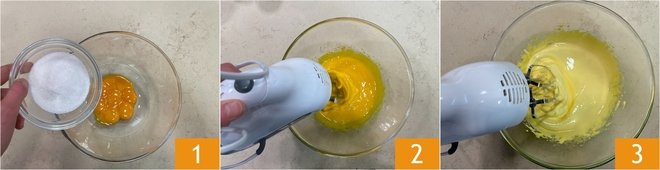
To prepare the tiramisu, first brew the coffee with a moka pot and let it cool in a shallow, wide bowl. Separate the eggs, dividing the whites from the yolks; remember that to whisk the whites properly there must be no trace of yolk. Put the yolks in a bowl (they should weigh about 120 g — approx. 4.2 oz, roughly 6–7 large yolks), add half the amount of sugar (100 g — about 1/2 cup, 3.5 oz) 1 and beat with electric whisks 2 until the mixture becomes pale and frothy 3.
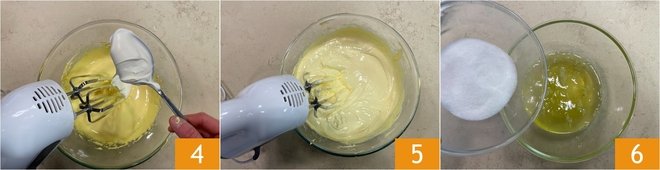
With the beaters still running, add the mascarpone little by little 4 until you obtain a dense, compact cream 5; set it aside. Clean the beaters very well and move on to whisk the egg whites (you will need about 360 g). Pour them into a bowl and add the remaining sugar 6.
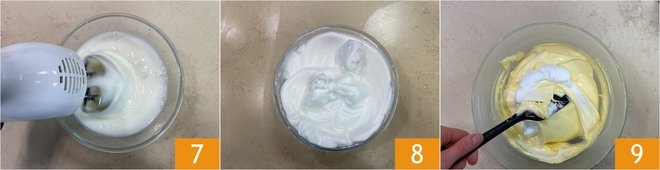
You should whisk them to stiff peaks 7 8. Take a spoonful of the beaten whites and pour it into the bowl with the mascarpone cream and mix with a spatula 9; this will loosen the mixture.
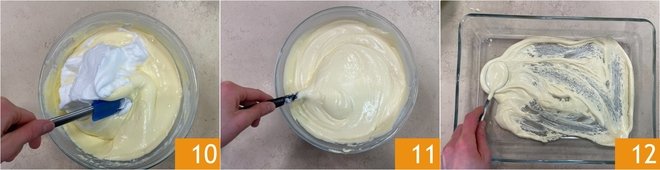
Then add the remaining whites all at once, folding very gently from the bottom to the top 10. The mascarpone cream is now ready 11. Spoon a generous dollop on the bottom of a glass baking dish about 35x25 cm (about 14 x 10 in) and spread it evenly over the base 12.
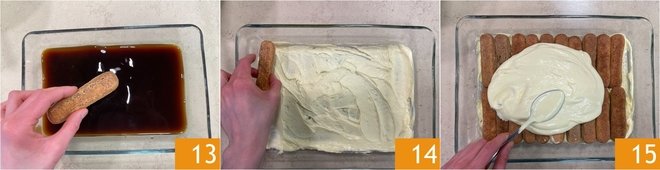
Quickly dip the ladyfingers in the cold coffee for a few moments, first on one side and then on the other 13. As you go, place the soaked ladyfingers in the baking dish, trying to arrange them all in the same direction 14 to form the first layer of biscuits. Add about half of the mascarpone cream and spread it well 15 so as to cover them completely.
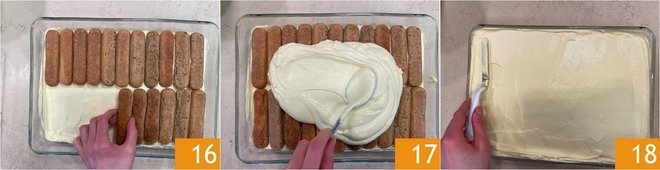
Place another orderly layer of ladyfingers soaked in coffee on top (16), then make another layer with the remaining cream (17) and level the surface well (18).
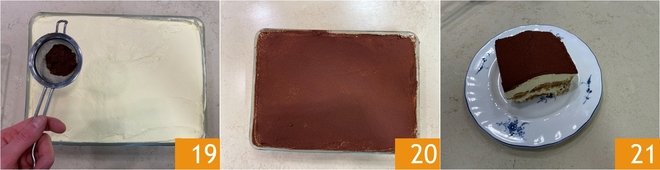
Dust with unsweetened cocoa powder 19 and let it set in the refrigerator for a couple of hours 20. Your tiramisu is ready to enjoy 21!